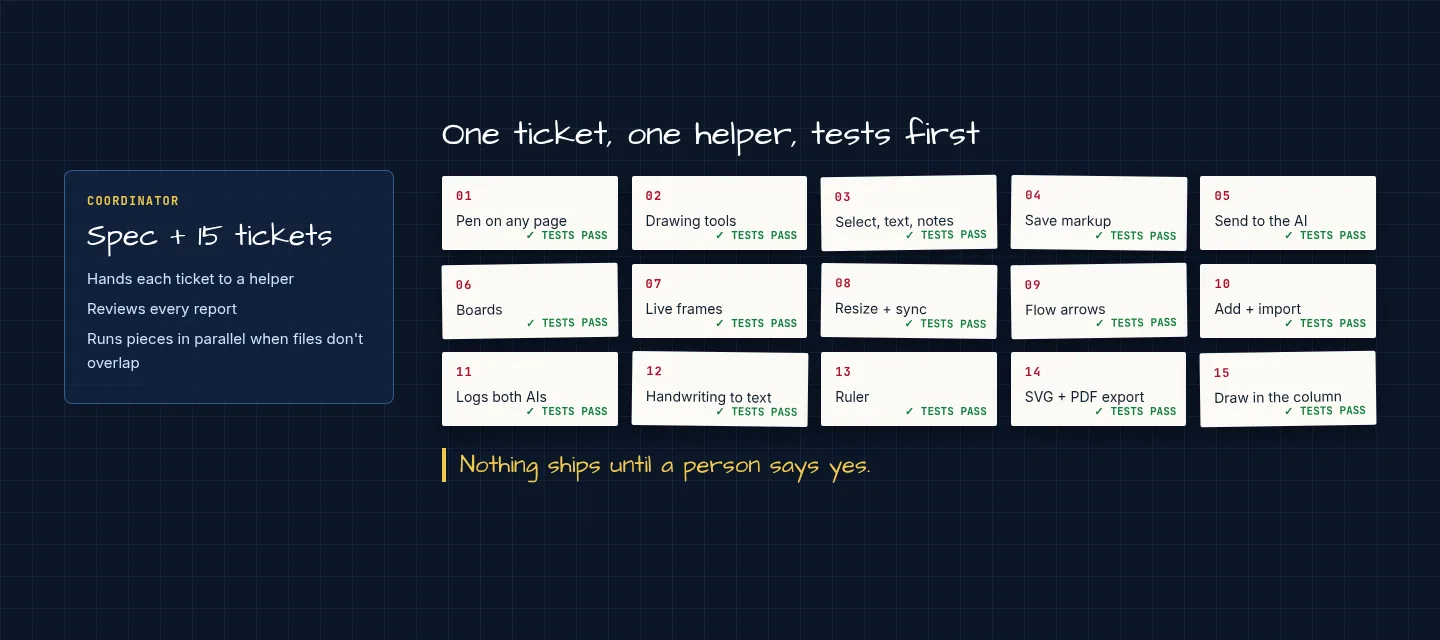
In the last two weeks we shipped a live site assistant, a hiring product, and a drawing tool built in 15 pieces. AI agents wrote most of that code. Here is the process that keeps it from turning into a mess.
Questions before code
Every new feature starts with rounds of numbered questions, each with a recommended answer. What happens when the visitor runs out of messages? Who sees the results? What does done look like? No code gets written until a person has answered them. It feels slow, and it is the fastest part of the project.
A spec, then tickets
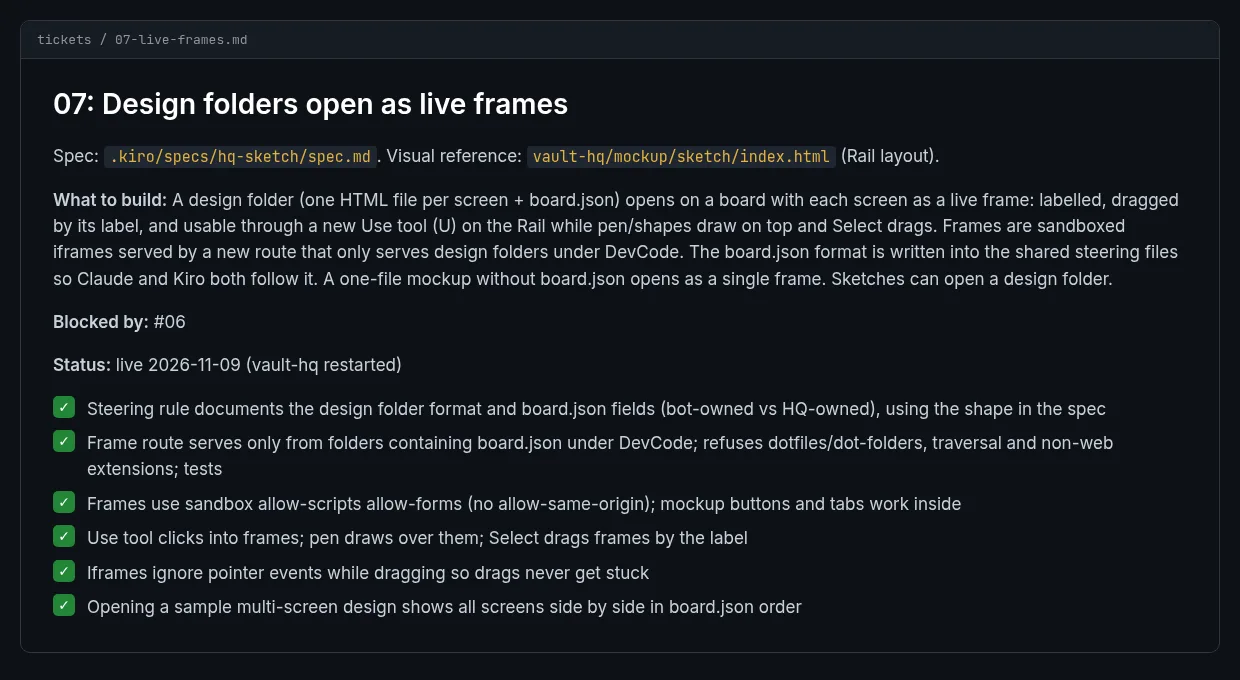
The answers become one short spec. The spec becomes tickets, each small enough to finish in one sitting, each listing which tickets have to land before it can start. That order is what lets several things happen at once without colliding.
- 01Questions answered
- 02Spec
- 03Tickets, in order
- 04Helpers build + test
- 05Review, then a person says yes
Helpers with a clean slate
Each ticket goes to its own helper agent. The helper gets the ticket and the spec, nothing else. It writes tests, builds, and reports back in a few lines: what changed, what passed, what broke. The main agent stays the coordinator. It keeps the big picture and reviews every report. Tickets that touch different files run at the same time.
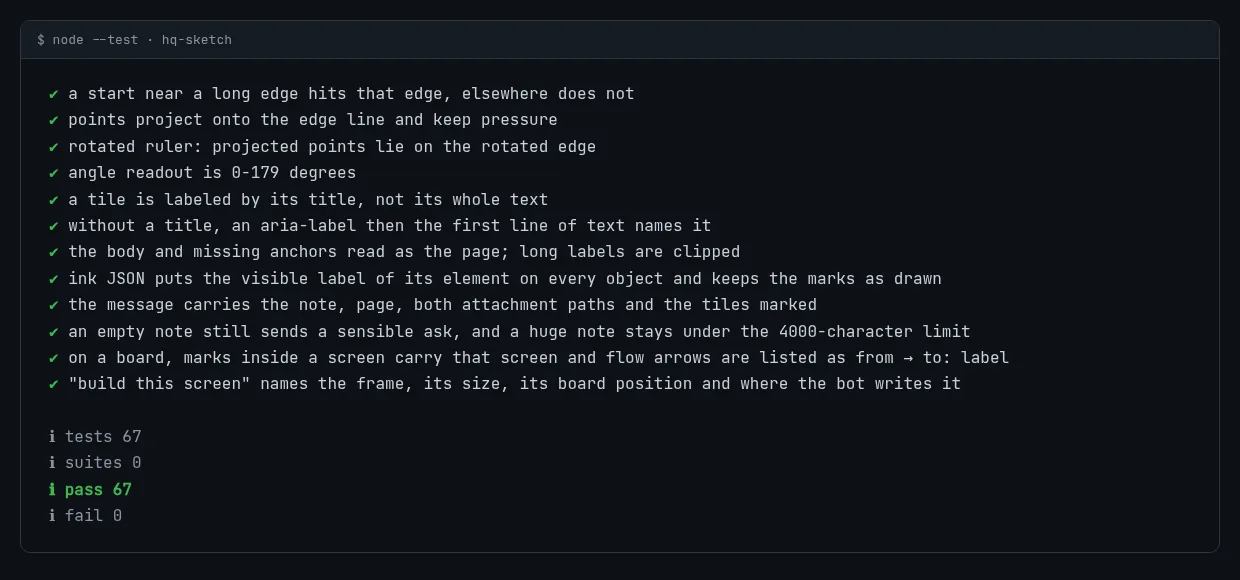
A helper that only knows its ticket cannot get distracted by the rest of the project.
Review catches real things
Every change gets a code review before it counts as done. On the site assistant, review found that the per-visitor limit trusted a value a visitor could fake, and that a summary email could be triggered too often. Both got fixed before launch, not after a bad weekend.
A second agent for when the first runs out
AI tools have usage limits. When ours gets close, it stops at a clean point and writes a hand-off: what is in progress, which files, the next step. A second agent from a different vendor picks it up with the same rules, and another runs around the clock for long jobs like overnight checks and note cleanup.
A person says yes
Agents build and test. They do not publish, deploy, send email, or spend money on their own. Anything that leaves our network waits for a person to approve it. That one rule is why we are comfortable letting them do the rest.
What this means for your business
AI can do a lot of the building. You still need questions asked up front, work split into pieces you can check, and a person who approves what goes out. We bring that process to client work, and we can help your team set it up too.